
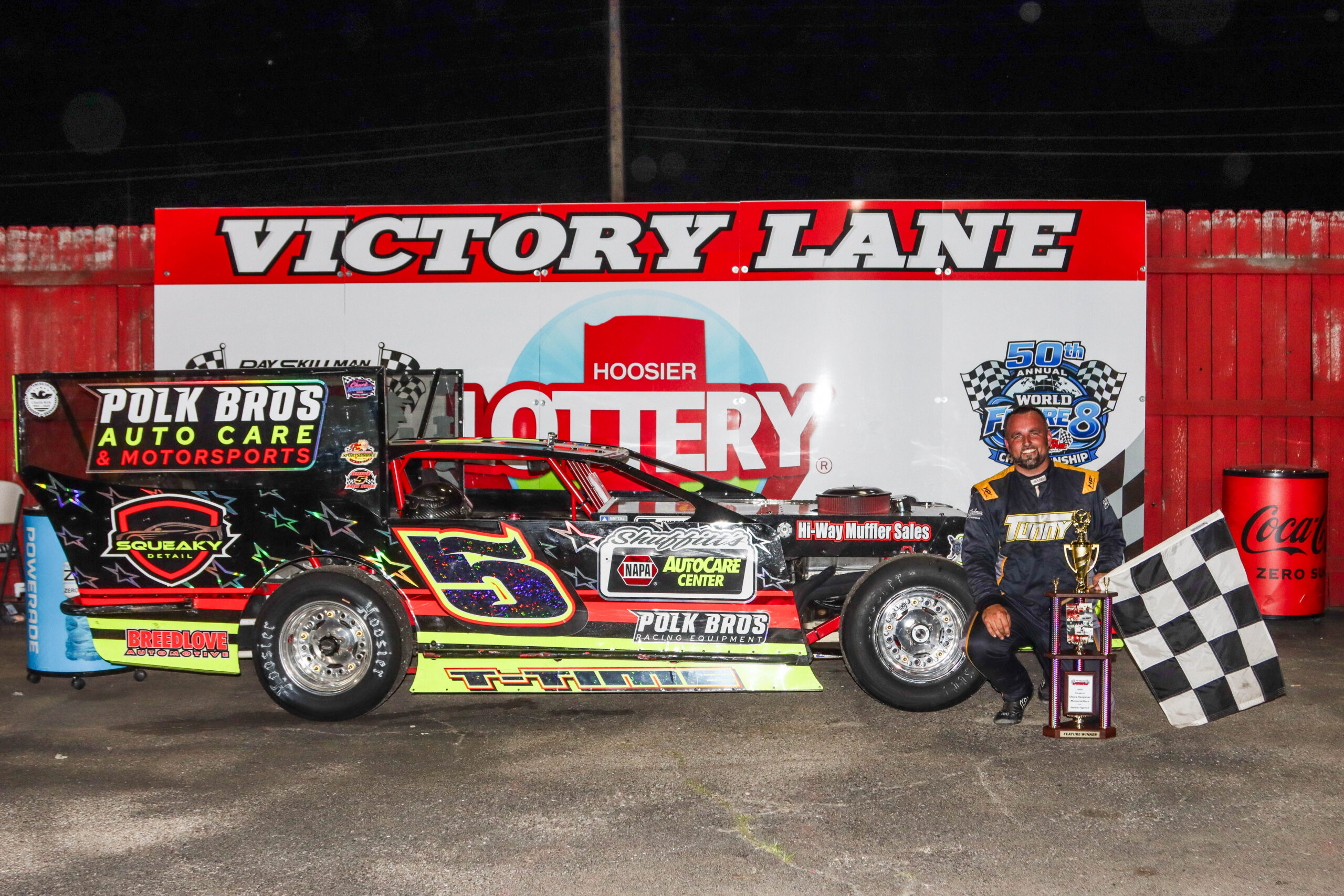
How to Win the World Figure 8 Championship 3-Hour: Ben Tunny's Recipe for Success
Racing is fast. We go to the race track for thrills, speed, and power. A three-hour race, though, calls for patience. Winning the 3-Hour Figure 8 race isn’t about being the fastest car for three straight hours.
For four-time champion Ben Tunny and the #5 Polk Bros Racing car, that’s the goal heading into any 3-Hour race, and especially heading into the 50th annual World 3-Hour Championship at the Indianapolis Speedrome.
Ben knows what it takes to survive and compete in a three-hour race. His experience and backing of the Polk Brothers’ Motorsports team gives him a unique perspective on the strategy behind winning.
So what does Ben say it takes to make it through three hours and have a shot at the championship? His ingredients to winning a long race: a resilient car, patience, track positioning, pit stop efficiency, and the experience to know that survival is more important than speed.
Building a Car That Lets the Driver Do Their Job
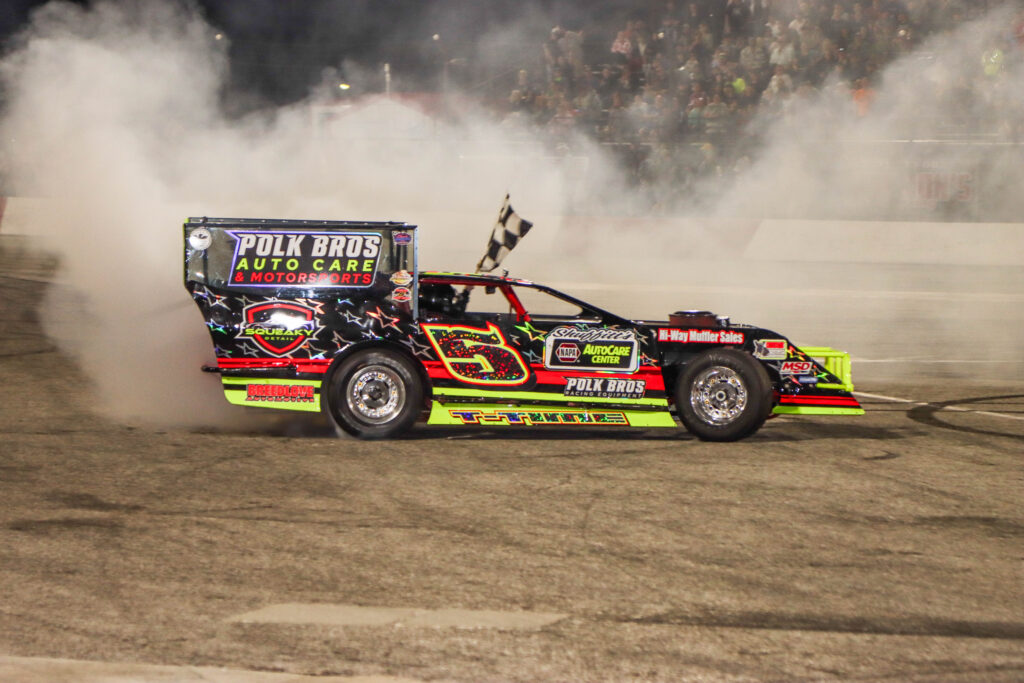
The biggest change for Ben and the team was building a new chassis for the “5-Star” car based on everything Ben has learned throughout his career and other chassis builds. It has given the team a new foundation to build on for the future and beyond.
After a frustrating couple of seasons, Ben is back on the podium, and the results from the new 5-Star make one thing clear: the speed is still there.
In four recent races, the upgraded #5 has produced one win and two second-place finishes. Three top-two finishes in four races is a strong start, but Ben knows the 3-Hour demands something different.
Working with his team in the fabrication room at Polk Brothers’ Motorsports, Ben helped develop a new chassis designed to be stronger, more refined, and more comfortable in the driver’s seat. The team made changes to the layout and construction with the goal of creating a car that would work better for a larger driver and give Ben a better platform to race.
The results have validated their new approach.
After two seasons of feeling like he was doing everything right without getting the results he expected, the new car gave Ben something important: confirmation that the problem wasn’t the driver.
“I can still do it,” Ben recently said on the Wild Will Throwdown podcast. “Everyone thought, ‘Ben’s just getting old and fat and he’s not hungry anymore and he doesn’t want it anymore,’ and no, it’s nothing to do with that.”
This confidence in the potency of the updated car is providing the foundation for an entire 3-Hour strategy.
The new chassis has already closed much of the gap with the competition, and Polk Bros’ Motorsports has continued developing the car to make it faster and more predictable. The next step is giving Ben the kind of power delivery he needs to maximize that chassis.
A brand-new motor is designed around a wide torque band, allowing Ben to get back to the throttle earlier and carry speed through the corners without having to constantly manage the power.
The 3-Hour Race Is About More Than Speed
It’s easy to think the fastest car should win, but over the course of three grueling hours, being fast is only part of the equation.
Ben has seen firsthand how quickly a race can change. This year, the field is larger, the traffic will be just as unpredictable, and the attrition level is expected to be higher than it used to be. A car that looks like a winner early can be out of contention after one incident, one flat tire, or one mistake.
That’s why Ben’s philosophy is simple: survive first.
Leading every lap? Overrated. Remaining competitive for the long haul? Critical. The goal is to stay on the lead lap and keep the car clean enough to take advantage when other cars begin dropping out.
And other cars will drop out. With 28 cars—and potentially up to 40—fighting for position, attrition becomes part of the strategy.
A crash ahead of you can change the entire race. A red or a yellow flag can bunch up the field of cars. A mistake by a competitor can suddenly put a car that started deeper in the field into contention.
The Polk team believes patience is a winning strategy, and Ben, at 39 years old, believes the strategic and mechanical adjustments can deliver his first 3-Hour win since 2021.
Pit Stops Could Decide the Winner
If speed gets an Outlaw driver into contention, pit stops could determine whether they stay there.
Ben is candid about this part of his previous 3-Hour races: pit stops haven’t always gone his way. Losing a lap during a stop can erase hours of good racing.
That’s something the Polk Bros’ team wants to target directly.
The team has improved its pit setup with a quick-dump fuel system, air jacks and equipment designed to get all four tires changed quickly. The objective is to make the pit stop faster and more reliable, but the unspoken goal is more ambitious than that—make it absolutely flawless.
The Polk team knows that every second matters, but avoiding a lost lap matters even more. In a race this long, the difference between a championship contender and a car chasing the leaders can come down to whether the team gets in, gets the work done, and gets back onto the track without giving away track position.
Track Position Matters
A car’s position in the 3-Hour Figure 8 is constantly changing, but that doesn’t mean track position becomes irrelevant. Quite the opposite, in fact—the team is determined to have the #5 near the front as much as possible without putting it in unnecessary danger.
If Ben can avoid incidents and stay on the lead lap, the team can let the race develop around him.
That approach becomes especially important as the field wears down.
A winning car doesn’t need to prove anything by forcing an unnecessary pass early in the race. The car just needs to survive when the mistakes start happening, when the field begins thinning out and when every position becomes more valuable. This is where experience becomes an advantage.
What Does it Take to Get Into Victory Lane?
Go fast. Stay out of trouble. Make the pit stops count. Keep track position. Finish the race. It’s as simple as that.
The new 5-Star car has already demonstrated that Ben has the speed and skill to compete, and his dominance throughout the years proves he’s got plenty left in the tank. The new car is designed to give him another step forward, particularly when it comes to getting through the corners and putting the power down. And Polk Racing has made changes in the pits to eliminate one of the biggest opportunities to lose valuable laps.
Now the team has to put everything together for three hours.
After a few frustrating seasons, the new and improved #5 has already answered the big question.
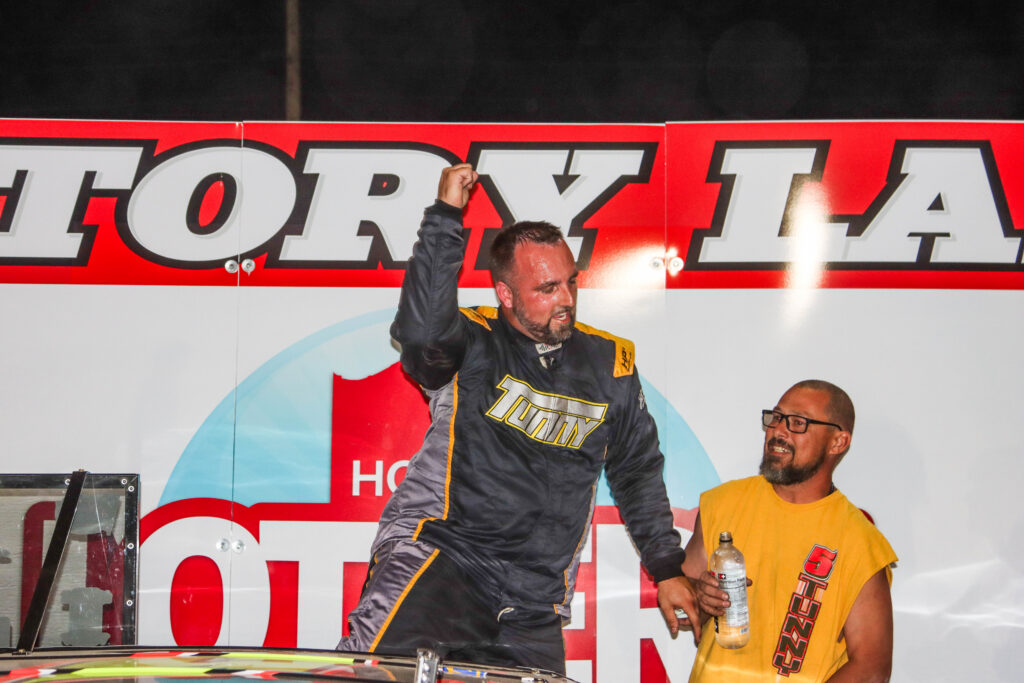
Ben Tunny still has the juice.
Ben Tunny's Winning 3-Hour Recipe
1. A resilient car
A 3-Hour Figure 8 race puts enormous strain on a car. The car needs to be durable enough to handle repeated contact, maintain performance, and keep going when other cars begin to fall apart. It also needs to be comfortable for the driver.
2. Patience
Winning isn’t about driving at full speed every second. Patience means knowing when to make a move, when to back off, and when protecting the car is more important than gaining a position. Survival is more important than speed, especially at the earlier stages of the race.
3. Track positioning
Where the car is on the track can make a major difference. Smart positioning helps avoid unnecessary crashes, find opportunities to pass, and stay out of trouble as the race gets more chaotic. Keep the car as close to the front as possible without putting it in unnecessary danger.
4. Pit stop efficiency
Every second in the pits is time spent away from the action. Fast, well-executed pit stops allow the team to make necessary repairs, refuel, and get the car back on the track without giving away more ground than necessary.
5. Experience
Three hours of Figure 8 racing can produce countless unexpected situations. Experience gives a driver the ability to recognize when to push, when to protect the car, and when simply surviving is more valuable than being the fastest car on the track.