A Family Legacy Built on Racing: The Story of Ben Tunny and the Tunny Family
Some families bond over Sunday dinners, summer vacations, or trips to the ballpark. The Tunnys? They bond over race cars, late nights in the garage, and the occasional backyard tractor race.
For the Tunny family, racing is more than a hobby and has served as a deep family touchpoint for generations. The Tunny legacy has brought parents, children, grandparents, and cousins together around a shared passion, a storybook agglomeration of love, excitement, and unfettered success. And few people embody that tradition quite like Ben Tunny.
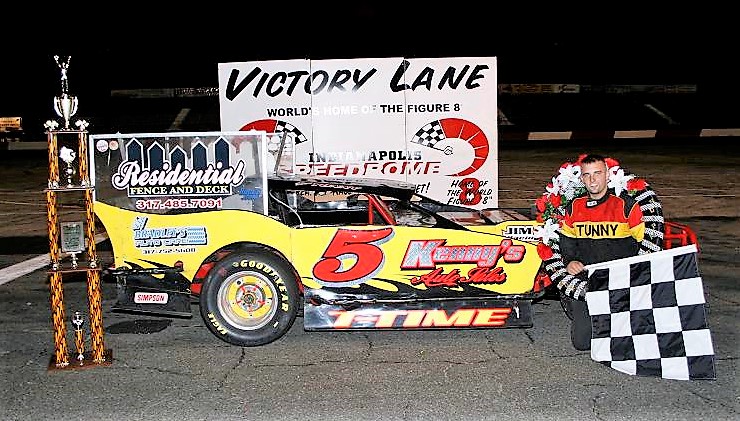
A successful figure-eight racer and a familiar face at world-famous Indianapolis Speedrome, Ben is part of a family whose racing roots stretch back to the 1960s. Long before he sat behind the wheel, his grandfather was building cars, his father, Bill Tunny, Jr., and uncle, Bruce Tunny, were making names for themselves on the track, and his grandmother was helping ensure the Speedrome would be around for future generations.
It’s a contemporary Americana story of family, fast cars, and a whole lot of time spent in the garage. The Tunnys have collected myriad racing accomplishments along the way, and have intense family pride. Yet beyond that success, Ben believes their greatest legacy might be the fact that they’re still doing it together, all these years later.
It All Started in the Garage
The Tunny family’s racing story began in the 1960s, when Ben’s grandfather, Bill Tunny, Sr., built a house and garage that would become something of a family headquarters.
Bill Tunny, Sr. started working on race cars for his brother, Ben’s great-uncle, Jim Tunny, who had been racing since the late ’60s. The garage became the place where cars were built, repaired, and prepared for competition. Jim eventually won a track championship and established himself as a respected competitor.
Before long, the next generation was getting involved.
Bill and Bruce grew up around that same garage, learning the mechanical side of racing and eventually getting behind the wheel themselves. Both became successful drivers, helping establish the Tunny name as a familiar one in the local racing community.
For Ben and his brothers, Jesse and Austin Tunny, the garage was practically an extension of their home.
“It became my grandpa, my dad, and all of us kids going over to grandma and grandpa’s house every night after school, after football practice, stuff like that,” Ben said. “We would go there and we watched. Then we’d work on my dad’s cars through our childhood until me and my brothers got old enough to race.”
As Ben got older, he became more involved in the work himself.
“And then when that happened, we continued to do that same stuff in that same garage from the same spot until basically now,” he explained.
That’s quite a family workshop.
And while the cars, drivers, and equipment have changed over the decades, the tradition of working together has remained remarkably consistent.
The Grandmother Who Helped Save the Speedrome
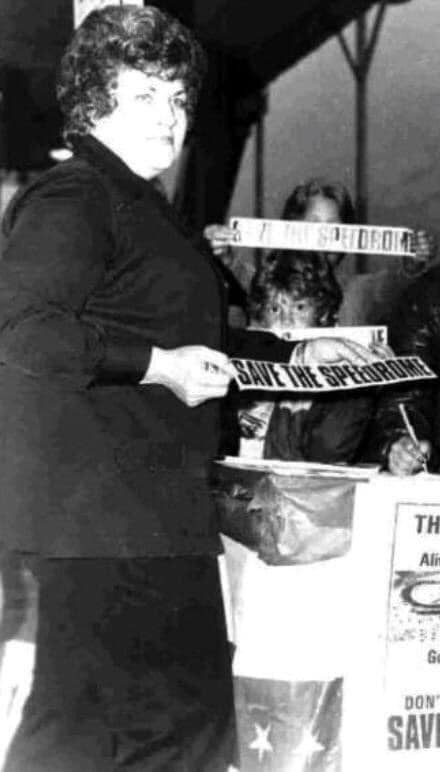
There’s another important member of the Tunny family whose contributions deserve just as much recognition, if not more – and certainly in a way transformative for Indianapolis.
While his grandfather and the rest of the family were busy in the garage, Ben’s grandmother, Phyllis Tunny, was involved in the racing community in her own way. She wrote articles for the Speedrome’s weekly publication, the Pit Board, covering races, schedules, and upcoming events. She also contributed to coverage at Indianapolis Raceway Park.
But her biggest contribution may have come around 1980/81.
At the time, the Indianapolis Speedrome was facing the possibility of closing because of noise complaints from the city. Rather than accept that outcome, Phyllis helped organize a petition and start a booster club to rally support for the track. Instead of sitting idly by, she worked hard to save the Speedrome.
Her efforts helped protect a track that would become an important part of the Tunny family’s history for decades to come.
Ben remembers his grandmother as the person who kept everything running outside the garage. She made sure everyone was fed, helped with homework, drove the kids around, and supported the family’s racing activities.
And she had a pretty good reason for doing it.
“She said what she liked about it is it kept us all close together, so that made us stay together as a family, and we got something fun to do as a family.”
That might be the best explanation of the Tunny family legacy there is.
She wasn’t necessarily concerned with how many races everyone won. She appreciated that racing gave the family something to share, kept the kids busy, and brought everyone together.
Her influence hasn’t been forgotten, either. Today, a mural in the shop’s waiting room features a photograph of her holding one of the stickers she had made during the campaign to save the Speedrome.
It’s a small but meaningful reminder that the family’s racing history wasn’t built by drivers alone. The Tunny legacy goes beyond the race track and strikes deep into the core of Indianapolis itself.
Backyard Tractor Races and a Lifelong Obsession
Before Ben and his cousin Mark were old enough to race professionally, they found creative ways to get behind the wheel of just about anything they could.
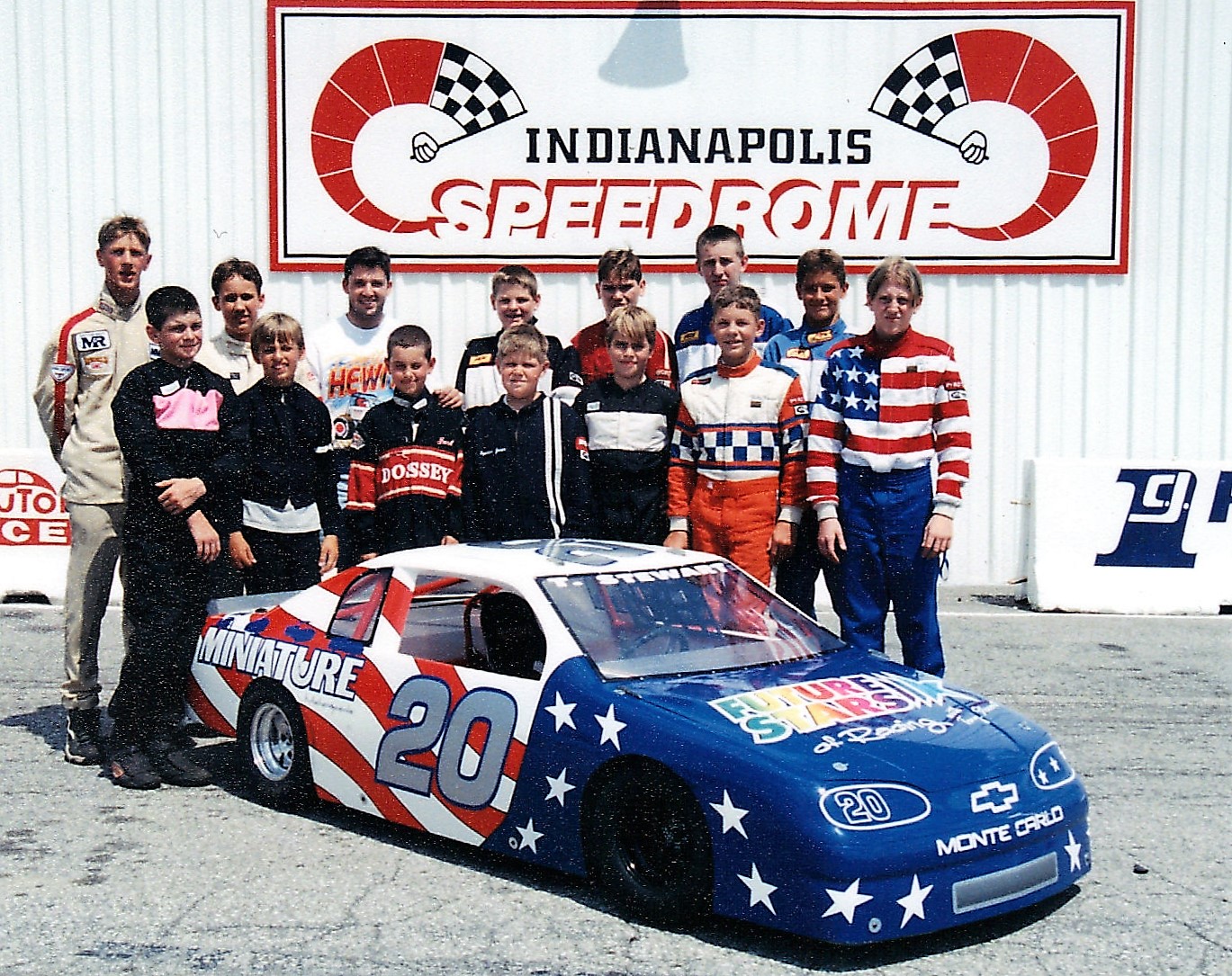
Ben first got a taste of organized racing around age 10, when the Speedrome owner allowed him and Mark to each take a turn in a Mini Cup car. Their families couldn’t afford to purchase one of the cars, which cost nearly $7,000 at the time, so the opportunity to drive a rental car was a pretty big deal.
After that one experience, Ben had to wait until he was 16 to begin racing full-time, but he didn’t waste the interregnum twiddling his thumbs. When the cousins weren’t able to get their hands on go-karts, they turned to whatever was available at their grandparents’ house.
“My grandpa had two tractors, one that was like a tractor that you hooked like a grater box to, to like work on your gravel driveway, and then he had a yard mower that like mowed the grass, and we would just get them out and start racing them just because we wanted to drive something.”
Yes, tractors, and not exactly high-performance tractors, either.
“They wouldn’t even be fast, like you could run as fast as they would go almost on foot, but we would just race them and do figure-eight and try to get close to hitting each other, but not hitting each other.”
This is how boys turn into racers. Ben and Mark were simply doing whatever they could to get a little taste of the sport. They watched races, played racing video games, asked questions, and spent as much time around cars as their families would allow.
Ben compared the experience to someone who loves golf but spends years playing video games, going to golf outings, and hitting putt-putt balls before finally getting their first real golf club.
“And then one day you’re Tiger Woods.”
For Ben, that moment came in 2003.
At 16, he finally got behind the wheel of a full-size figure-eight race car. Conveniently, his father had an older car sitting outside under a tarp after purchasing a new one a few years earlier. That car became Ben’s ticket into the sport.
The Competitive Spirit of a Tunny
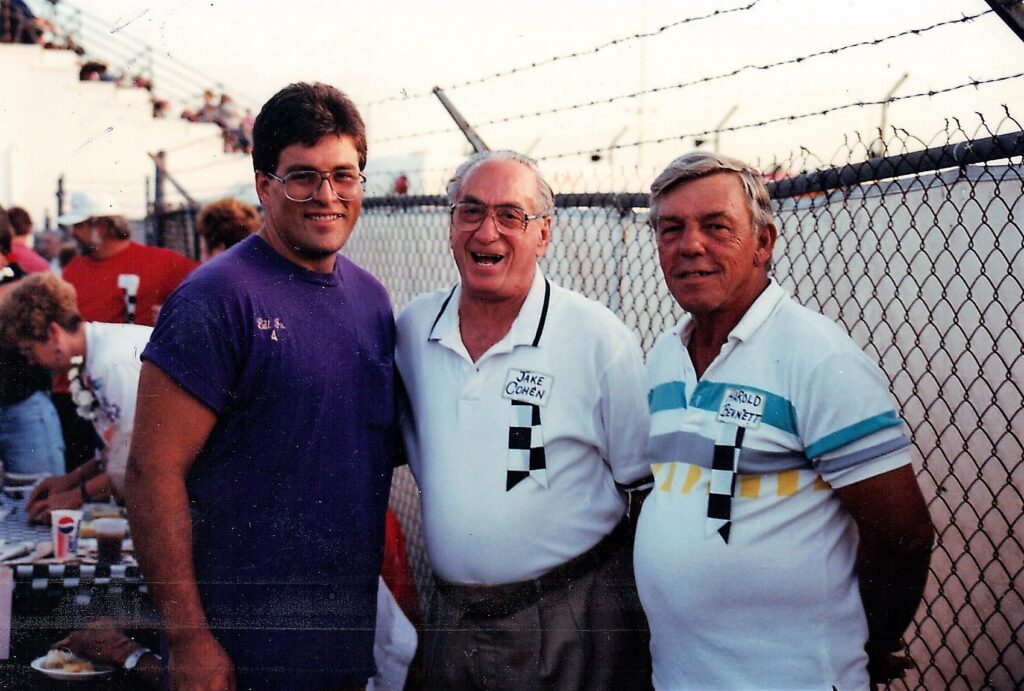
Of course, growing up around racing and actually succeeding at it are two different things. The Tunnys seem to have a knack for both.
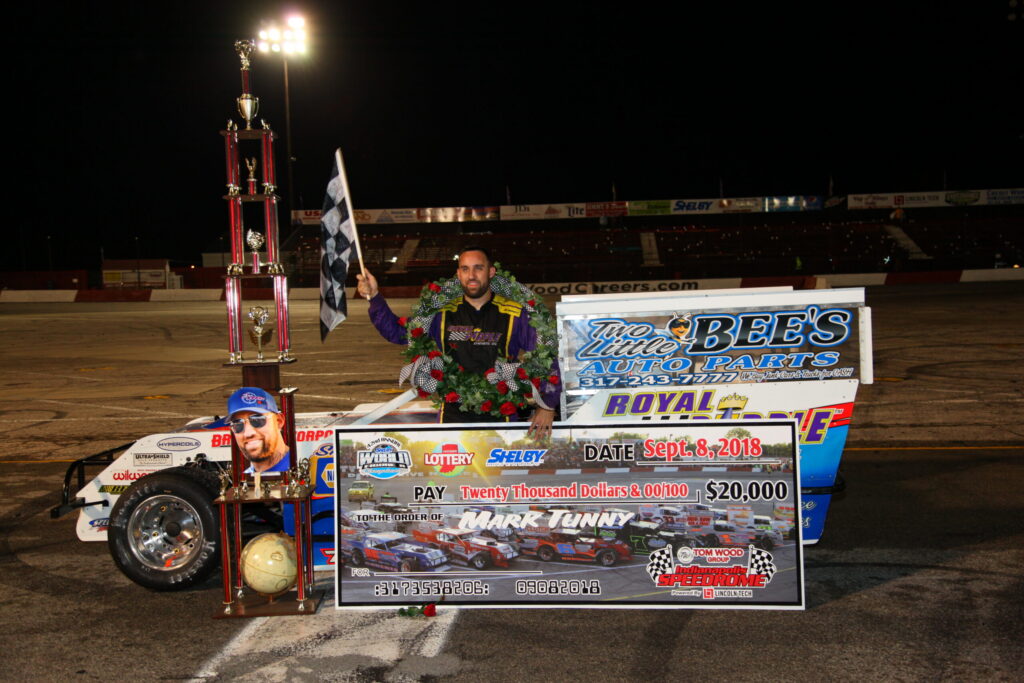
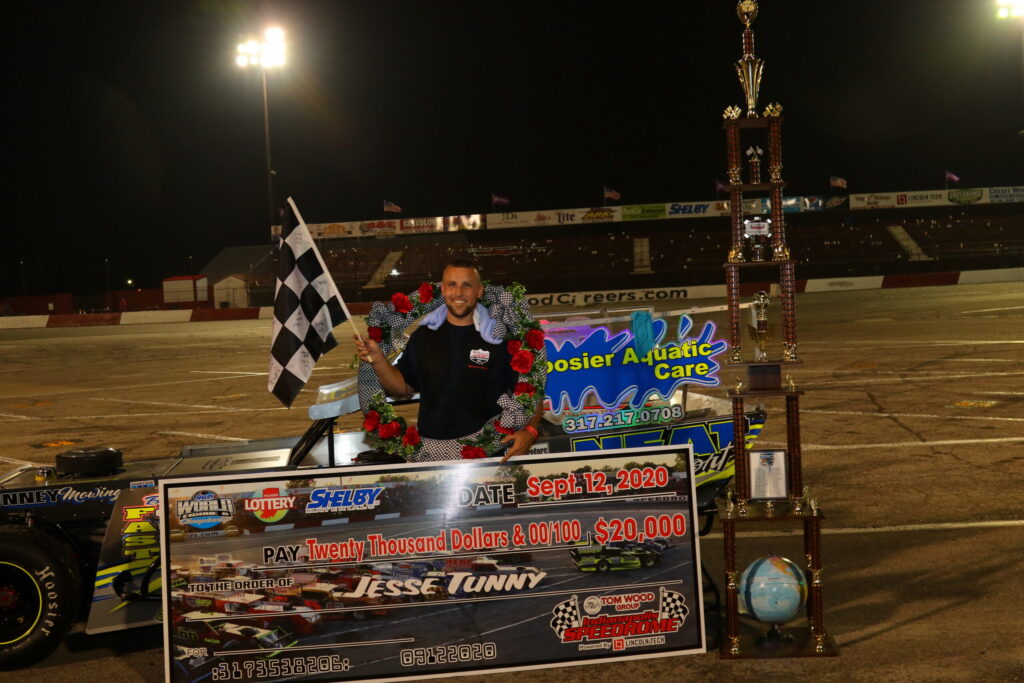
Ben’s father and uncle helped build and foster the family’s reputation through their success on the track. Ben and his brothers eventually followed, while his cousin Mark has continued racing and added his own accomplishments to the family history.
Today, several members of the family are still competing, and Ben believes they’re all capable of winning whenever they show up.
The Tunny story is unusual because it’s not a legacy built around one standout driver, propping up the rest of the legacy. We’re talking about a family tradition that has produced successful competitors across multiple generations. It’s like the Manning family’s NFL legacy, ported over to figure eight racing.
And what legacy does Ben Tunny want to leave?
He explained how his goals have changed over the years.
At first, the dream was simply to race. Then it moved into winning a race, then winning multiple races, then cruising to a championship, and eventually becoming one of the best drivers in the sport.
As he started checking those accomplishments off his list, his idea of the ultimate goal evolved.
“Like the neatest thing I feel like would be when you’re old and retired and can’t race anymore, you could go watch the races and just listen to the crowd or the announcer or just small talk through the pits and just hear people talk about how good you were,” he said, his eyes darting upward as if looking up at a future defined by his success. “I want to hear things like, ‘I don’t remember anyone ever being as good as you. I’ve never seen anyone race like you.’”
There’s no sugar-coating his ambitions, either. An athlete in a post-game press conference may be inclined to give politically-correct answers to a similar question, layering responses around platitudes designed to be unselfish and magnanimous. Ben doesn’t have time for that. He doesn’t want to be remembered for things he did off the track, or anything else.
“I just kind of would rather be like the Michael Jordan of figure eight,” he said. “I want to be remembered as the best ever, and if you’re in the discussion, that’s a pretty respectable legacy there.”
And for someone who grew up racing tractors in his grandparents’ backyard, it’s been quite a ride getting here.
Keeping the Legacy Alive
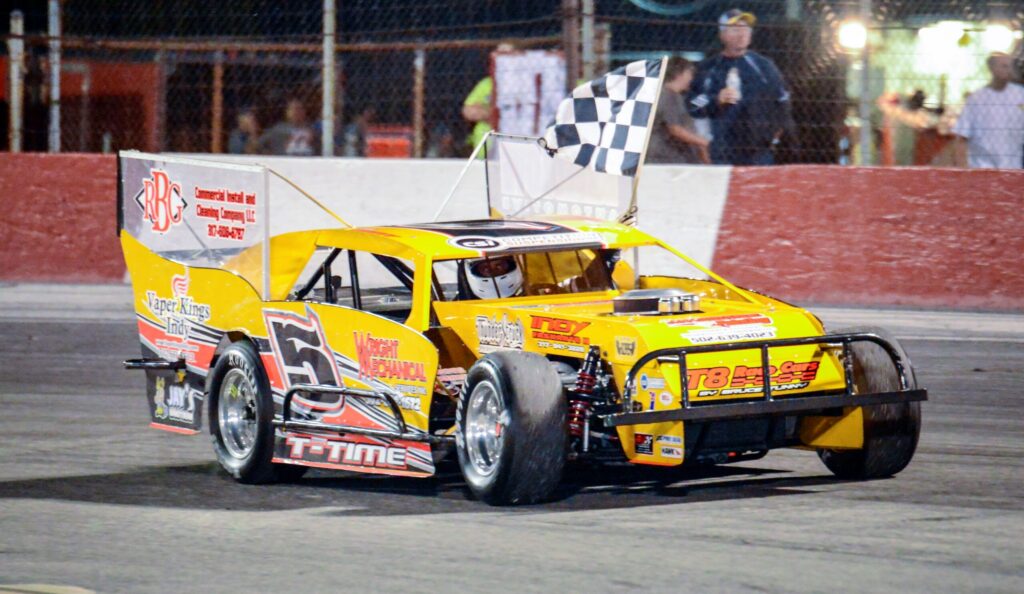
The Tunny family’s story is still being written.
Ben continues to compete, and the family’s involvement in racing remains a multigenerational affair. But his role in the sport has expanded beyond driving.
In 2021, Ben was approached about a sponsorship opportunity through Bob Polk and his brothers, whose interest in supporting figure-eight racing eventually led to a much bigger partnership.
What began as a sponsorship developed into a business relationship involving race car parts and equipment. Eventually, Bob purchased the building where Ben now works, bringing Ben into the operation and giving him an opportunity to help grow the business.
For Ben, the goal is to build something sustainable that can continue supporting the racing community.
It’s another way of staying connected to the sport that has shaped so much of his life.
And in many ways, it brings the story full circle. Just as his grandfather spent years building and preparing cars in the family garage, Ben now works in an environment where he can help other racers get what they need to compete.
The setting might be different, but the passion is familiar.
Spend a little time listening to Ben talk about his family, and it’s clear that the story means more to him than what’s happened on the track.
It’s the grandfather who started it all in a garage. The grandmother who helped save the Speedrome. The father and uncle who showed the next generation what it meant to be a racer. The brothers and cousins who grew up together, learned together, and eventually competed alongside one another.
Ben summed it up simply when discussing what has made the family’s legacy possible.
“It’s basically from generation to generation, it’s been carried on because we’ve all been passionate about it.”
And that’s really what it’s all about.